Winter in the Finger Lakes doesn’t act like winter anywhere else in New York. Lake-effect bands off Keuka and Seneca can dump six inches of snow on Route 14A while a town twenty minutes away stays dry. A car that runs fine in October can start failing you in December, and most of it comes down to five things: the battery, the tires, the suspension, the windshield, and the brakes. This winter car maintenance checklist covers what actually breaks down out here, why it breaks, and when it’s worth a trip into the shop before it strands you on a county road at 6 a.m.
Quick checklist: What to check before winter hits
Here’s the full list in one place. Each item is covered in more detail below.
- Battery: Test it if it’s 3+ years old or cranked slowly last winter.
- Tires: Check pressure and tread depth monthly as temps drop.
- Suspension: Watch for new vibration, clunking, or pulling from frost heave and potholes.
- Windshield: Repair chips before the first hard freeze, before the cold makes them spread.
- Brakes, oil & heater: Listen for grinding, switch to winter-weight oil, and confirm the heater’s blowing hot.
- Farm & work trucks: Extra check for battery, alternator, and suspension strain from towing and plow mounts.
- NYS inspection: Book it before the first hard freeze if your sticker expires in winter.
Building a winter car maintenance checklist for these roads
Standard winter advice assumes steady cold and occasional snow. Yates County gets neither. Temperatures here can swing 20 to 30 degrees inside a single week when a lake-effect band rolls through, and county trucks lay down heavy road salt on 14A and the surrounding rural roads all season. That combination hits a car from three directions at once: the electrical system takes the cold snap, the metal underneath takes the salt, and the roads themselves, cracked and patched from freeze-thaw cycles, take a toll on tires and suspension that flatter, drier winters never would.
A generic checklist written for Denver or Chicago misses most of this.
Battery: Why your battery is usually the first thing to go
Cold doesn’t kill a car battery outright. It just exposes a battery that was already weak. The chemical reaction that produces starting power slows down as the temperature drops, so a battery that cranks the engine without hesitation in July can struggle to turn it over once nights start dropping into the teens. Add in a longer defroster run and headlights on for more of the day, and the battery is working harder while producing less.
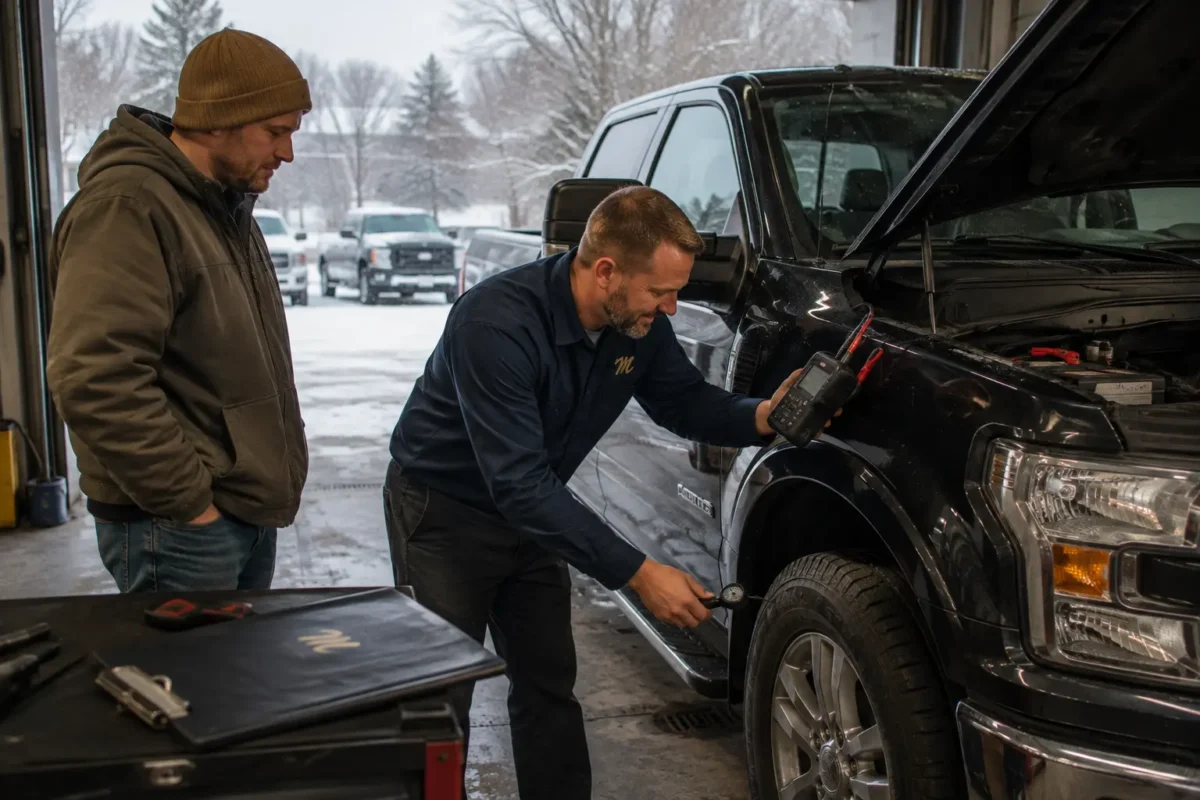
If your battery is three years old or more, or it cranked slowly last winter, don’t wait for a cold snap to find out it’s failing. It’s a quick thing to check during a general engine diagnostics visit, and catching it in your driveway beats catching it on the road at 6 a.m.
Tires: What actually happens to your tires in the cold
Tire pressure drops as the temperature does. The rule of thumb is roughly 1 PSI for every 10-degree drop, so a tire that reads 32 PSI in September can be sitting closer to 26 PSI by a hard January morning without a single leak anywhere. Underinflated tires lose grip exactly when you need it most, and they wear unevenly, which shortens the life of a set that might otherwise get you through another season.
Tread depth matters just as much on wet, slushy roads. New York’s own inspection standards check tread wear for exactly this reason, and it’s one of the items covered in our guide on how to pass your NYS inspection. If you’re not sure what your tread looks like right now, a flashlight and a penny will tell you more in thirty seconds than guessing will.
Suspension: Frost heave and potholes on county roads
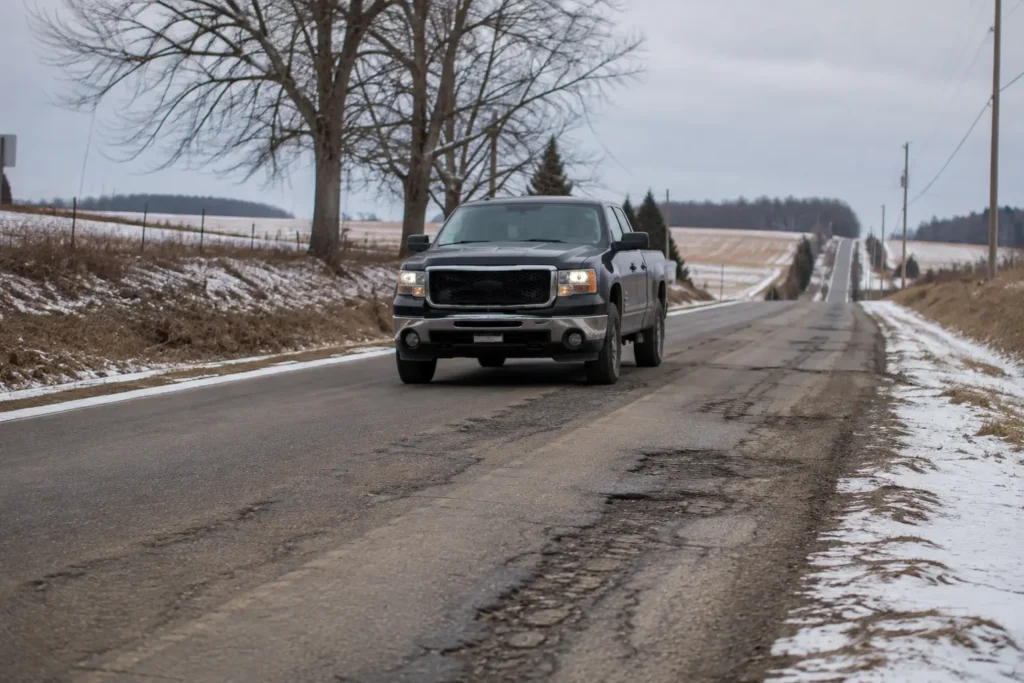
Frost heave occurs when moisture in the ground freezes, thaws, and refreezes beneath the pavement. It’s brutal on rural roads that don’t get repaved every year. These roads develop frost-heave bumps and potholes every winter that can knock a wheel out of alignment or wear out a strut faster than normal driving would.
You’ll usually feel it before you see it: a new vibration at highway speed, a clunk over bumps that wasn’t there in the fall, or a vehicle that pulls slightly to one side. None of that is something to drive on through spring. A suspension inspection catches loose or worn components early, before a bad pothole turns a minor fix into a major one.
Windshield: Why a small chip turns into a crack overnight
Glass contracts as it gets cold, and a chip is a structural weak point that contraction finds fast. A rock chip that sat stable all summer can spread into a foot-long crack the first night temperatures drop hard, especially if you blast the defroster on max heat against a windshield that’s been sitting at 15 degrees all night. The temperature swing between the glass surface and the air hitting it is usually the actual trigger, not the cold alone.
The fixed window is short. A chip smaller than a quarter can often be repaired quickly, well before it has a chance to spread; once it cracks all the way across, replacement is the only option. If you’ve been driving around a chip since last summer, meaning to deal with it eventually, the first hard freeze is when it eventually runs out. Our windshield rock chip repair page covers what’s repairable versus what needs a full replacement.
Brakes: The basics worth a second look
Cold makes brake problems more obvious, not more common. Rotors and pads that were borderline in October start squealing or grinding once road salt and moisture work into them, and stopping distances on packed snow are already longer than most drivers expect. If your pedal feels softer than usual or you’ve heard a grinding sound, that’s worth a brake inspection before the first real snowfall, not after a close call on the road.
Two smaller things round out the basics. Engine oil thickens as it gets cold, which is part of why a full-service oil change before winter matters more than people think. And a heater blowing lukewarm air instead of hot usually means a stuck thermostat or low coolant, not something to just live with until spring.
Trucks: If you’re running one for farm or work use
A lot of the winter advice written for sedans doesn’t hold up for a truck that’s hauling a plow, pulling a trailer, or sitting in a field half the day. Extra weight and towing put more strain on a battery and alternator that are already working harder in the cold, and a plow mount adds stress to front suspension components that a passenger car never sees.
If you’re running a truck through calving season, hauling firewood, or plowing your own driveway and a few of your neighbors’, it’s worth having it looked at before the season gets busy rather than in the middle of it. We’ve been servicing trucks and farm vehicles since 1959, and the difference between routine wear and something about to leave you stuck is usually obvious to someone who’s seen a few thousand of them.
Inspection: Timing it with your NYS inspection
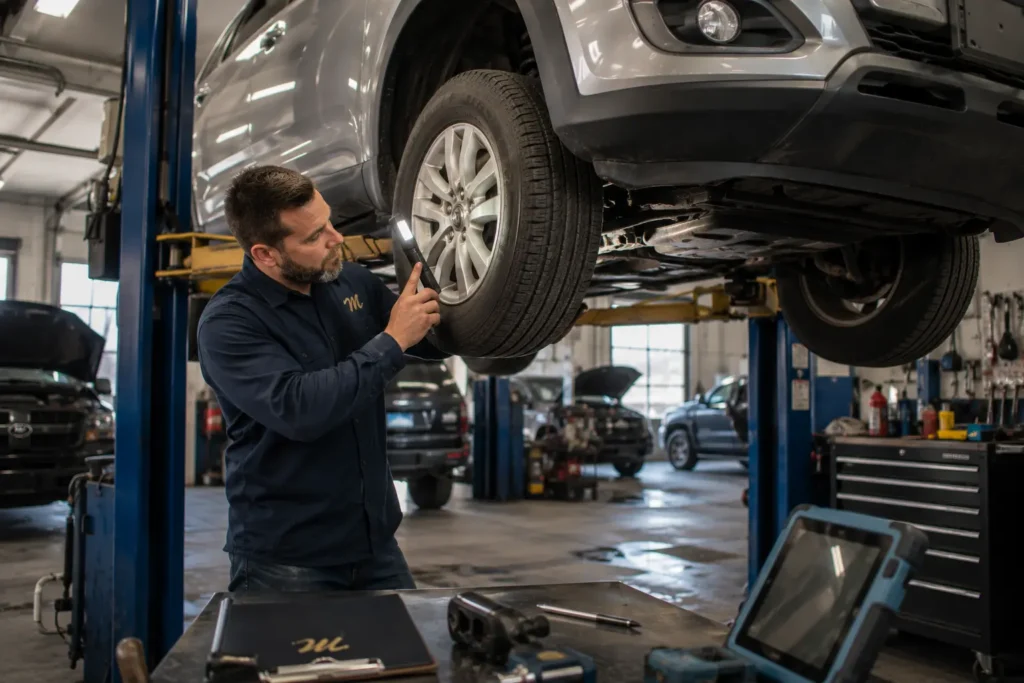
If your inspection sticker expires anytime between November and March, use it as your winter checklist deadline instead of a separate task. A New York state inspection already checks brakes, tires, and lights, which covers a good chunk of this list in one visit. Booking it before the first hard freeze means any issue gets caught and fixed while you can still get a same-week appointment, not during the first cold snap when every shop nearby is booked solid.
None of this requires an overhaul. Most of it is a couple of hours in a shop that knows what winter actually does to a vehicle, done once before the snow settles in instead of after something fails. Call ahead, get it looked at, and spend the rest of the winter not thinking about your car at all.