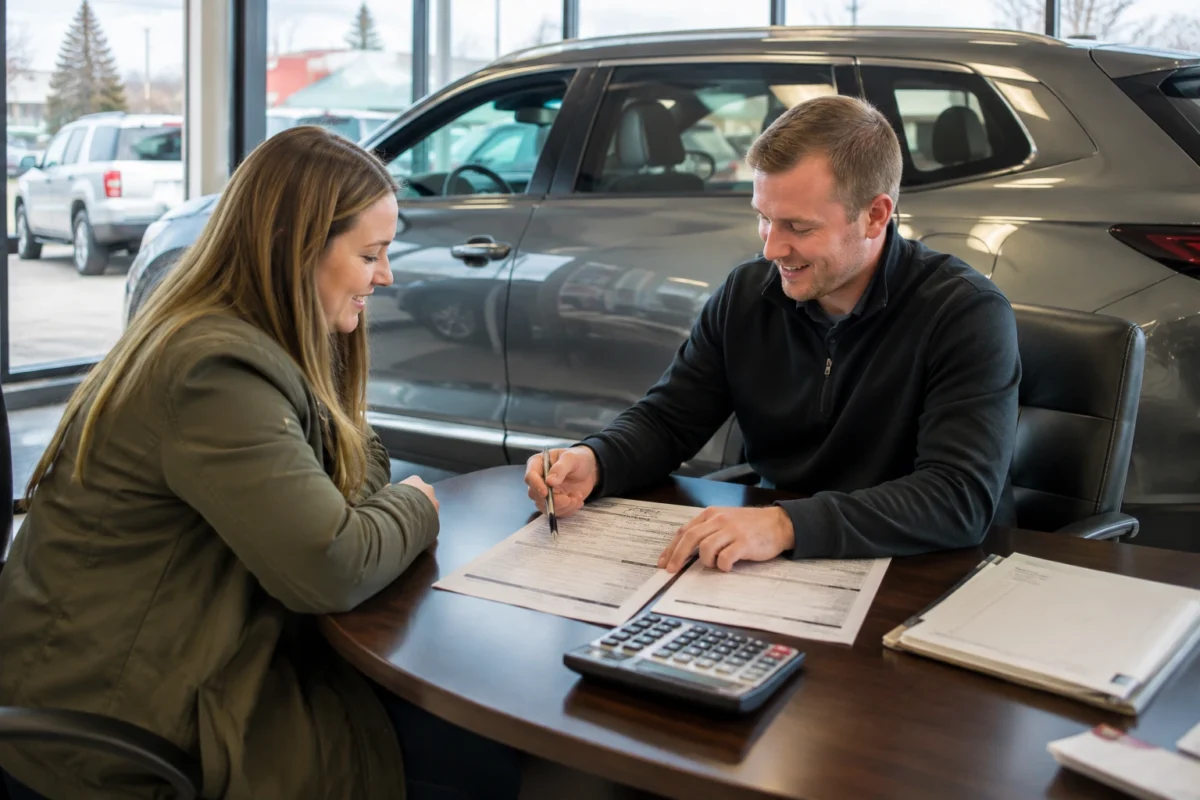
Most buyers assume a bigger down payment is always the smarter move. It usually helps, but the honest answer is that the right number depends on your credit, your monthly budget, and how comfortable you are watching your savings account shrink after you drive off the lot.
At Marbles Automotive, we walk buyers through this decision every week. 10 to 20 percent down covers most situations, but the right number for you might be lower or higher.
What a down payment actually changes on a used car
A larger down payment does two things. It reduces the amount you finance and the total interest you pay over the life of the loan. That’s it. It doesn’t change the vehicle’s price, and it doesn’t guarantee a better interest rate on its own.
Here’s how the math works in practice.
Say you’re buying a $15,000 used vehicle. Put 10 percent down ($1,500), and you finance $13,500. Put 20 percent down ($3,000) instead, and you finance $12,000. That’s $1,500 less in loan principal, and a smaller balance means a lower monthly payment and less interest paid overall.
The exact dollar difference depends on your rate and term, which is where Marbles’ car loan calculator is genuinely useful. Plug in a real vehicle price and see the payment shift before you decide anything.
No markup on your financing rate
Here’s something that trips up many first-time buyers. At many dealerships, the interest rate you’re quoted isn’t the bank’s actual rate. It’s the bank’s rate plus a markup the dealership adds on top, and it isn’t always disclosed clearly. A bigger down payment can soften the impact of a marked-up rate by shrinking the balance that the markup applies to. But it’s still money working against you that shouldn’t be there in the first place.
We don’t mark up financing rates from the bank at Marbles. What the bank quotes is what you pay, whether you put down 10 percent or 30 percent. The same goes for the extras some shops stack onto a used-car deal: extended warranties, paint and fabric protection, rust proofing. We don’t add those unless you ask for them, so your down payment and your monthly payment reflect the actual price of the vehicle, not a padded one.
Should you put down more than 20%?
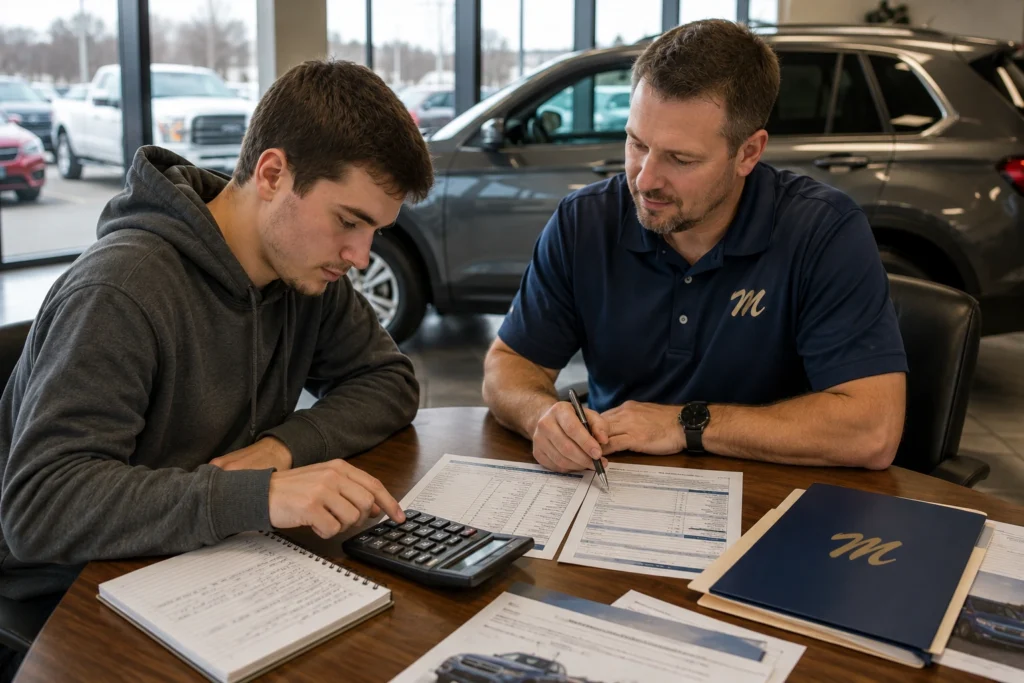
On paper, putting down more than 20 percent almost always helps. Your payment drops further, and you pay less interest overall. The real question isn’t whether it’s a good financial move. It’s whether it’s the right move for you right now.
If a bigger down payment means draining the cash you’d need for a repair bill, a rent payment, or an actual emergency, a smaller down payment with a slightly higher monthly payment is usually the safer call. Keeping some savings on hand after you buy matters more than shaving a few dollars off a loan payment.
Buying from a shop that doesn’t mark up financing rates and doesn’t bury add-on fees already keeps more of your money working for you, before you’ve even decided how much cash to put down. That’s often a better trade than emptying a savings account to hit a round number like 20 percent.
What catches first-time buyers off guard
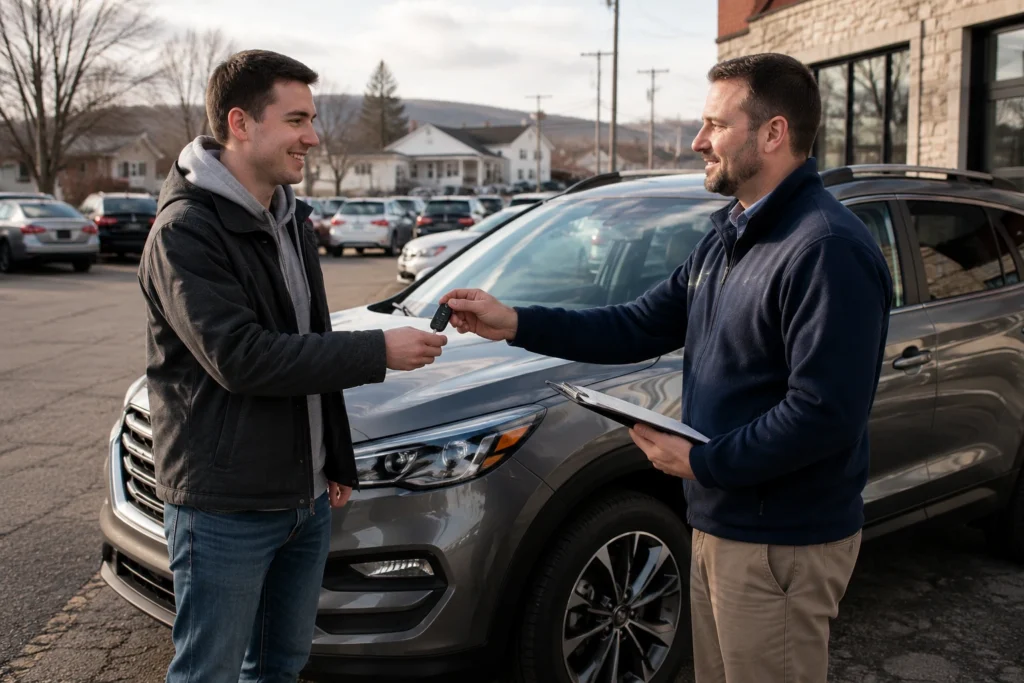
Two costs surprise buyers more than any others. The first is negative equity, which happens when you owe more on the loan than the vehicle is worth, usually because the down payment was too small relative to a longer loan term. Putting down enough to stay ahead of the vehicle’s depreciation, even by a modest amount, protects you if you need to sell or trade in earlier than planned.
The second is New York’s sales tax on the purchase. It’s handled separately from your financing and is due when you register the vehicle, not folded into your down payment. Rates vary by county, so check current figures with the New York DMV before you budget the total cash you’ll need at signing. And if this is your first time buying used, it helps to also run through the questions to ask before you buy, so you’re checking the vehicle itself and not just the financing.
Frequently asked questions
Is it better to put more money down on a used car?
In most cases, yes, because it lowers both your monthly payment and total interest. The exception is when a bigger down payment leaves you without a cash cushion for emergencies. A smaller down payment paired with a slightly higher monthly payment is often the safer choice if your savings are limited.
Can I get a used car loan with no down payment?
Yes, many lenders finance used vehicles with no money down. Expect a higher monthly payment and a slower start to building equity, since the loan begins at the full purchase price. That’s fine as long as the payment and term still fit your budget.
Does trading in my car count as a down payment?
It can. If your current vehicle is paid off or worth more than what you still owe on it, that equity reduces the amount you need to finance on the next one, just as cash down does. Bring it in and ask how the trade-in value applies before you decide how much cash to put down separately. The two often work together to lower what you finance.
The right down payment isn’t a fixed percentage. It’s whatever keeps your monthly payment comfortable and your savings intact after you drive away. Run your own numbers, then bring your questions to Penn Yan. We’ll walk through the financing without adding a markup or a fee you didn’t ask for.