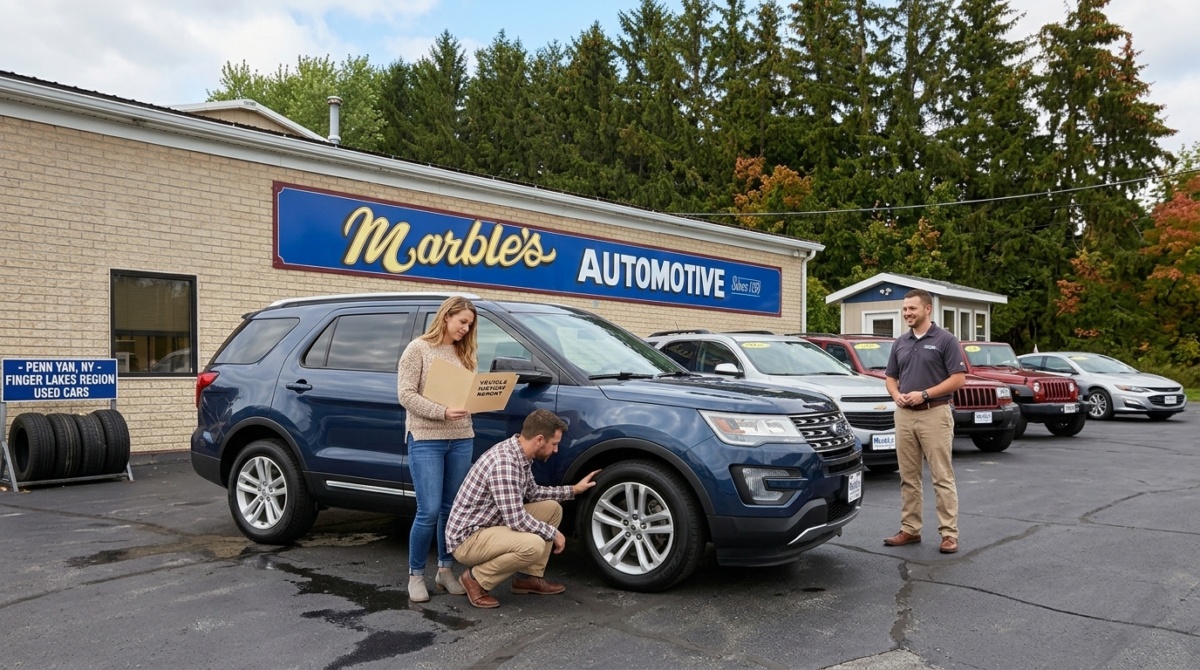
Ask the wrong five questions when buying a used car, and you won’t find out what’s wrong with it until your second winter behind the wheel. The five that matter most are why the seller is letting it go, whether the title is clean, how many owners it’s had, what the vehicle history report shows, and whether the mileage matches its age. Buying in Penn Yan or anywhere else in the Finger Lakes adds a sixth question: have the wheel wells and frame been checked for road-salt rust? Everything below covers those six, what changes if you’re shopping for a truck instead of a car, and what New York actually requires a dealer to put in writing before you sign anything.
The Core Questions Every Used Car Buyer Should Ask First
Why Is the Seller Letting This Car Go?
A straight answer here tells you more than almost any other question on this list. “Upgrading to a bigger SUV for a new baby” or “downsizing now that the kids drive” are answers you can check against the car in front of you. A vague answer, or one that changes depending on who’s talking, is worth slowing down for.
This question works on dealer lots too, just phrased differently. Ask how long the vehicle has been in a used car inventory and why a trade-in or previous owner moved on from it. A dealer who answers specifically, rather than with a general “it’s a great car,” is showing you they actually know the vehicle’s history.
Is the Title Clean, or Is It Salvage, Flood, or Lien-Branded?
Get this answer before you get attached to the car, not after. A clean title means no major insurance write-off, no flood designation, and no outstanding loan against the vehicle. A salvage or flood-branded title doesn’t automatically mean walk away, but it changes the price you should pay and the insurance you’ll be able to get.
Cars with flood histories sometimes resurface for sale far from where the damage happened, including in inland markets like upstate New York. The vehicle history report below is the fastest way to check this, and it’s worth doing even on a car you’re buying from someone you trust.
How Many Owners Has the Car Had?
Three or more owners in a short number of years is worth a direct question, even though there’s no official cutoff for “too many.” A 7-year-old car that’s changed hands three or four times has a different risk profile than the same car with one careful owner the whole time, even at identical mileage.
Don’t treat owner count as a disqualifier on its own. A car that came off a lease, then went to a rental company, then to its current private owner can still have excellent service records. The number matters less than what you find when you ask for those records and check the vehicle history report against them.
What Does the Vehicle History Report Actually Show?
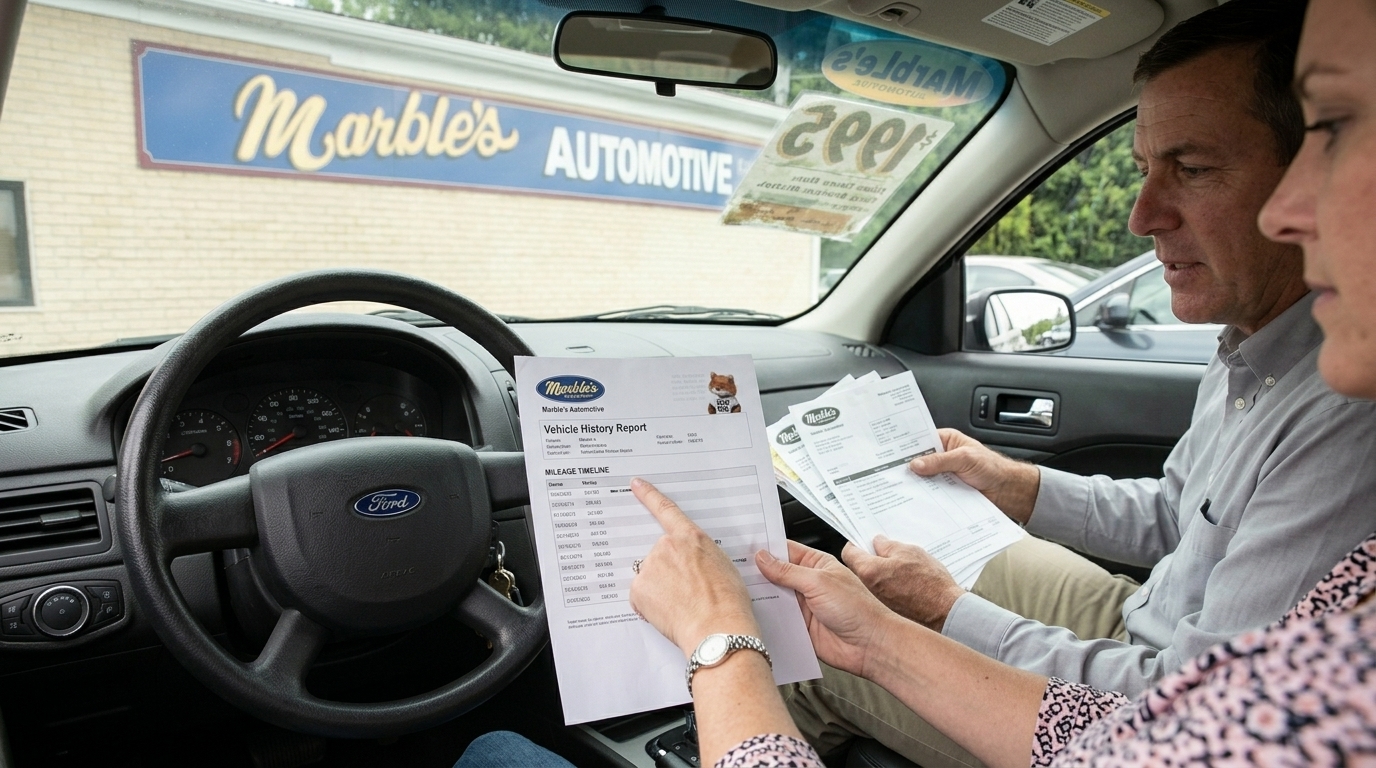
A vehicle history report (from CARFAX or AutoCheck) shows accident history, title brands, recorded odometer readings over time, and open recall status tied to the VIN. It will not catch everything. A report can come back clean on a car that still has real mechanical problems, because not every fender-bender gets reported to insurance.
Use the report to confirm what the seller told you, not as a substitute for asking. If the odometer readings in the report don’t climb at a normal pace for the car’s age, or if there’s a gap of a year or more between recorded readings, ask why.
Does the Mileage Match the Car’s Age?
A rough benchmark is 12,000 to 15,000 miles per year. A 5-year-old car in that range usually sits between 60,000 and 75,000 miles, which is normal and not a red flag by itself.
Two things matter more than the raw number, though. First, how those miles were driven: highway miles put far less stress on an engine, transmission, and brakes than the same number of miles in stop-and-go city driving. Second, whether the mileage lines up with a documented service history. A car with 130,000 highway miles and a stack of oil-change receipts can be a better buy than a 70,000-mile car with no maintenance records at all.
Questions About Condition, Inspection, and Repairs
Has the Car Had a Pre-Purchase Inspection?
Ask this even if the seller says the car was “fully checked” before it went up for sale. A pre-purchase inspection by a mechanic who has no stake in the sale is a second, specific look at the exact vehicle in front of you, not a general once-over. It typically runs $100 to $200 and can save you several times that if it catches a problem before you buy instead of after.
If you’re buying from a dealer that has its own service department on-site, you have an option a lot of private-seller purchases don’t: ask the technicians who work there every day to look the car over before you commit, instead of arranging an outside inspection on your own schedule.
Does It Show Rust From Finger Lakes Winters?
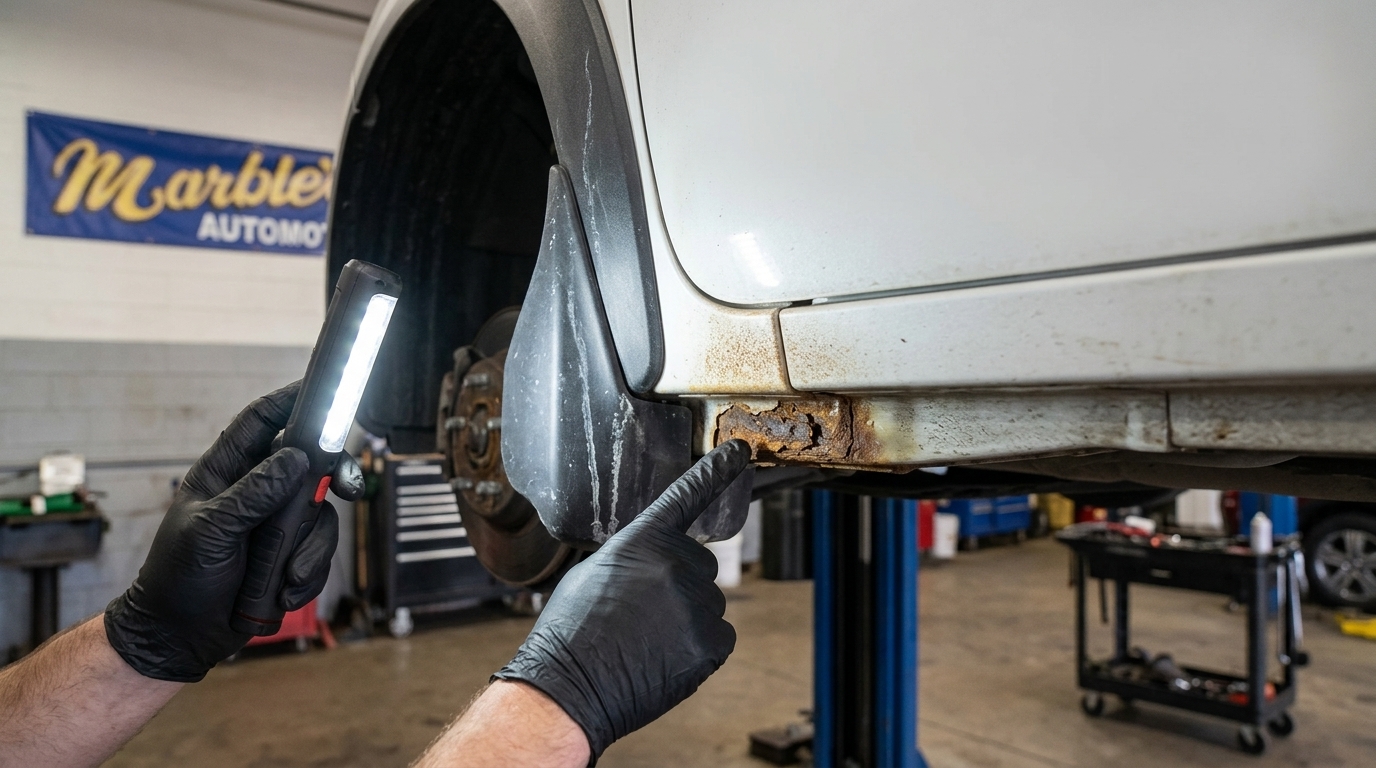
This is the question most national car-buying guides skip entirely, and it’s the one that matters most if you’re buying anywhere in Yates County or the surrounding Finger Lakes towns. Road salt accelerates corrosion in specific, predictable spots, not evenly across the whole vehicle.
Before you buy, have someone check:
- The wheel wells, especially the rearward edges, where salt spray collects first
- The rocker panels under the doors, and the last several inches at the rear of each one
- The frame rails and suspension mounts, where surface rust is cosmetic but flaky, crumbling rust can mean structural compromise
- Around the windshield gasket, where small paint bubbles can signal rust forming underneath
Surface rust that scrapes off to reveal solid metal underneath is normal wear in this climate and not a reason to walk away on its own. Rust that flakes, crumbles, or has already eaten through metal is a different conversation, and it’s worth knowing which one you’re looking at before you negotiate a price.
What Do the Fluids, Belts, and Tires Look Like?
Pop the hood before you take it for granted that everything underneath is fine. Oil should look dark brown to black, not milky or full of visible particles. Coolant should be green or orange, not rusty or cloudy. Transmission fluid should smell neutral, not burnt.
Tires tell a quieter story. Mismatched tire brands across the four corners can mean a repair that wasn’t done right, or simply a budget replacement after a flat. Either way, ask about it rather than assuming.
Are There Any Open Safety Recalls?
This one takes thirty seconds and costs nothing. Run the VIN through the NHTSA recall lookup tool before you buy, not after. An open recall doesn’t mean the car is unsafe to drive right now, but it does mean there’s a manufacturer-covered repair waiting for you, and it’s worth knowing about before you negotiate price rather than discovering it later.
Questions About Price, Fees, and Financing
What’s the Out-the-Door Price, Not Just the Sticker Price?
Ask for this number in writing before you get into financing details. The out-the-door price includes the vehicle price plus any documentation fees, add-ons, and taxes, and it’s the only number that tells you what you’re actually paying. A sticker price that looks competitive can hide markup in the fees attached to it.
Marbles Automotive’s own FAQ page puts this plainly: no hidden extended warranties, no paint and fabric protection add-ons, no rust-proofing charges tacked on without your say. If a seller hesitates to give you a straight, itemized answer to “what’s the total, all in,” that hesitation is the answer.
Will the Interest Rate Be Marked Up From the Bank’s Rate?
This is worth asking directly, because dealer financing isn’t always priced the same as the underlying loan. Some dealers add a markup on top of the rate the lender actually offers, which can add real money over the life of a loan without ever showing up as a separate line item.
At Marbles, the rate you’re quoted is based on your credit score and passed through from the bank without an added markup. Whoever you’re buying from, ask the question directly: is this the bank’s rate, or has something been added to it?
Is the Car Sold With a Warranty, or As-Is?
Every dealer in the country is required to post a Buyers Guide on each used vehicle for sale, stating clearly whether it comes with a warranty or is sold as-is, and what percentage of repair costs the dealer covers if there is a warranty. Read this sticker before you read the price tag.
“As-is” means exactly what it says: once you drive off, repairs are on you. That’s not automatically a bad deal if the price reflects it and the inspection came back clean, but it’s a different financial position than a car backed by even a short warranty, and you should know which one you’re agreeing to.
Buying a Used Truck in Penn Yan? Ask These, Too
What Has This Truck Actually Been Used For?
A truck that spent years plowing driveways or hauling a trailer every weekend has a different wear pattern than one that mostly drove to the office and back. Ask directly, and then look for the physical evidence: worn or replaced hitches, mounting brackets on the front bumper from a plow setup, or heavy wear inside the bed liner.
None of these automatically disqualify a truck. A well-maintained work truck can outlast a babied daily driver. But the price and the inspection priorities should reflect which kind of life the truck has actually had.
Does the Frame Show Rust at the Wheel Wells or Suspension Mounts?
Trucks sit lower to the road salt spray than most cars and tend to show corrosion earlier in the same spots: wheel wells, frame rails, and suspension mounts. This question matters more for trucks than for passenger cars, because a truck’s frame carries more of its structural load.
Have someone check the underside on a lift, not just from a flashlight at ground level. Light surface rust on the frame is common and not a dealbreaker in this region. Rust that’s deep enough to flake away in chunks, especially near a suspension mount, is a structural question, not a cosmetic one.
Does It Have the Towing and Payload Capacity You Need?
Ask for the specific towing and payload numbers for that exact configuration, not a general number for the model line. Cab style, bed length, and engine and axle combination all change what a given truck can actually pull or carry, sometimes by a few thousand pounds between trims of the same model year.
If you’re buying for a specific job, like pulling a horse trailer or hauling firewood through a Finger Lakes winter, bring those numbers with you and compare them against the truck’s actual rating, not just what feels like enough.
Your Rights as a Used Car Buyer in New York State
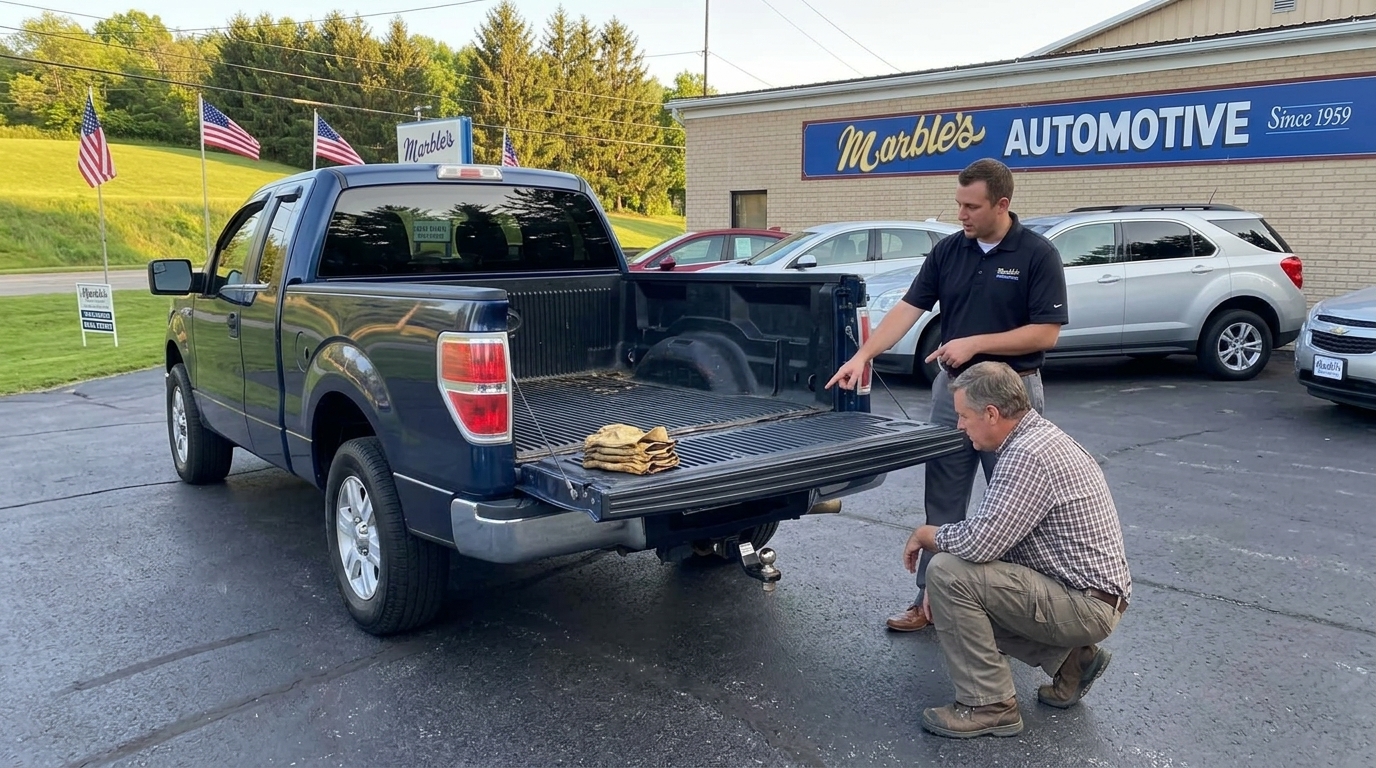
Does New York’s Used Car Lemon Law Cover This Purchase?
This is the question almost no national car-buying guide answers correctly, because the rules are New York-specific. According to the New York State Attorney General’s office, the Used Car Lemon Law generally applies when you buy from a New York dealer, the price is at least $1,500, the car had fewer than 100,000 miles at purchase, and you’re using it mainly for personal purposes. Private sales aren’t covered.
When the law applies, the dealer has to give you a written warranty covering parts like the engine, transmission, drive axle, brakes, radiator, and steering. How long that warranty lasts depends on the mileage at the time you bought it: roughly 90 days or 4,000 miles for vehicles between 18,001 and 36,000 miles, 60 days or 3,000 miles between 36,001 and 80,000 miles, and 30 days or 1,000 miles between 80,000 and 100,000 miles. If a covered defect can’t be fixed after three repair attempts, or the car is out of service for 15 or more cumulative days, you may be entitled to a refund through the Attorney General’s arbitration process.
What Should Be on the Buyers Guide Sticker?
Beyond New York’s lemon law, federal law requires every used vehicle sold by a dealer to carry a Buyer’s Guide. It has to state the major mechanical and electrical systems covered, whether the car is sold with a warranty or as-is, and what share of repair costs the dealer will pay if something covered fails.
Read it before you sign anything, and ask the dealer to walk you through it line by line if any part of it is unclear. If the printed Buyers Guide and the verbal promises you’ve been given don’t match, the Buyers Guide is the document that legally controls.
Ask Marbles Automotive Before You Sign
We have sold and serviced pre-owned vehicles in Penn Yan, NY. Three generations of our family have run this local shop. We have a wide range of pre-owned vehicles so you can find the right match for you. Or, you can call us directly with your used car questions. We promise zero sales pressure and no hidden fees.