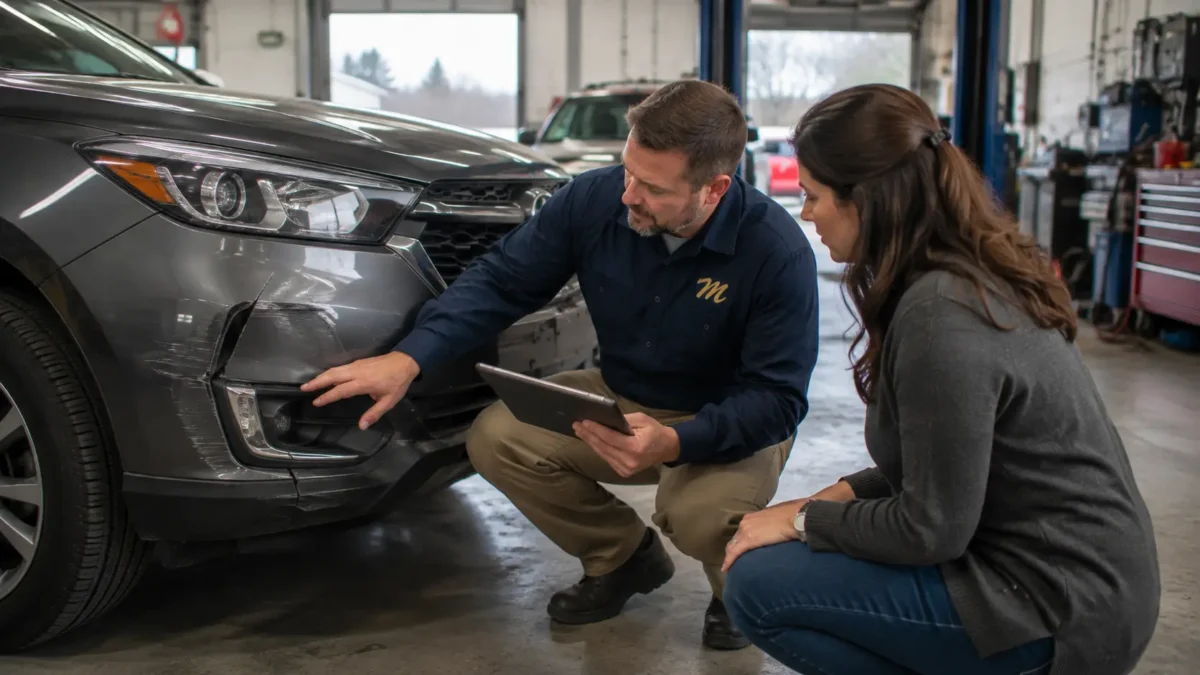
A scraped or cracked bumper usually costs somewhere between $150 and $2,000 to fix in Penn Yan, and the number depends less on how bad the damage looks than on what’s happening underneath it. Cosmetic damage like scratches, scuffs, and small dents typically falls between $150 and $600. Cracked bumpers, structural damage, or bumpers with parking sensors and cameras run higher, often $500 to $1,500 or more, and full replacement on a sensor-equipped or luxury bumper can exceed $2,500.
Three things move that number the most: how deep the damage goes, whether the bumper has to come off the car to be assessed properly, and whether anything electronic sits behind it. A scuff that only needs sanding and a fresh coat of paint stays cheap; a crack near a mounting tab rarely does. Marbles Automotive’s collision team handles dent and bumper repair in Penn Yan every week, and the factors below are the same ones that shape every estimate we write.
Cost by type of damage
Here’s how the most common types of bumper damage typically break down in cost, based on national collision-repair data:
| Damage type | Typical cost range | Notes |
| Scratches or minor scuffs | $150-$600 | Often just sanding, primer, and repainting |
| Small dent (plastic bumper) | $150-$500 | Frequently smoothed and refinished without full replacement |
| Crack or deep gouge | $300-$800 | Plastic welding is common; paint adds to the total |
| Bumper with sensors or ADAS cameras | $500-$1,500+ | Recalibration alone often adds $300-$800 |
| Full bumper replacement | $800-$2,500+ | Higher for luxury trims or multiple sensors |
Cosmetic damage is the cheapest fix by a wide margin, and the moment sensors or cameras enter the picture, the number changes fast.
Should you repair the bumper or replace it?
Repair almost always wins when the damage is cosmetic and the structure behind the bumper is sound. Replacement makes more sense once a crack reaches a mounting point, a sensor is damaged, or the bumper won’t hold its shape anymore.
Every modern bumper is really two parts: the plastic cover you see, and a reinforcement bar or foam energy absorber behind it that does the actual work of absorbing an impact. A two-inch crack on the cover can look minor and still mean a bent bar underneath. That’s not something a shop can tell from a photo. It takes the cover off the car.
Parts choice affects the bill too. OEM (original equipment manufacturer) bumpers cost more but match the factory fit exactly. Aftermarket covers run cheaper and work fine for older vehicles, though fit and paint match can vary by brand. If insurance is paying the claim, ask which parts your policy covers before you agree to anything.
Should you file an insurance claim or pay out of pocket?
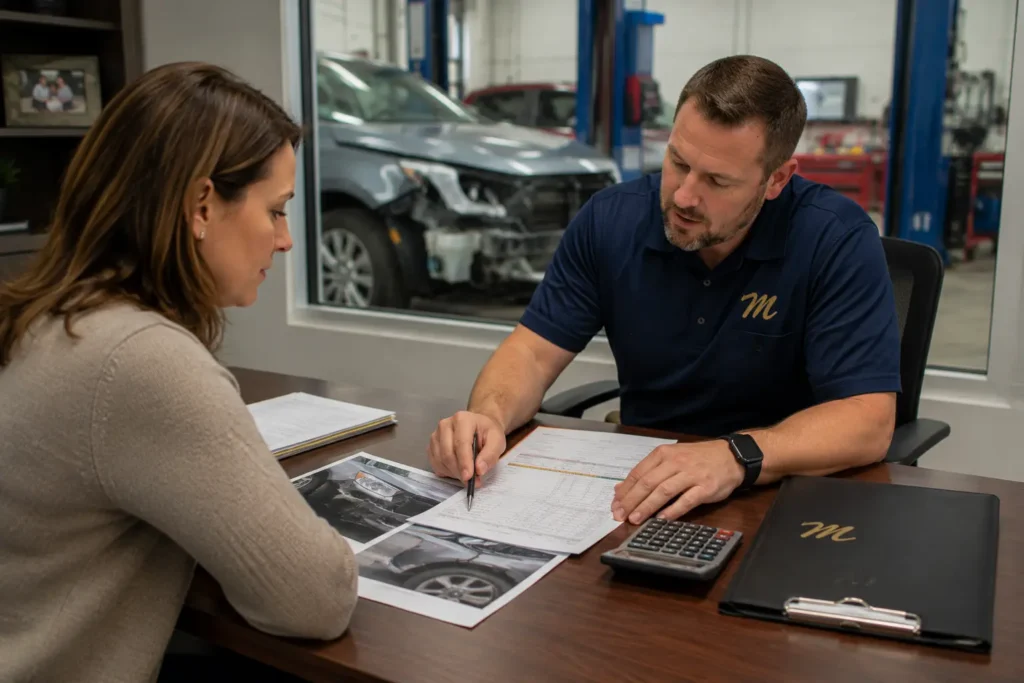
File a claim when the repair cost is clearly higher than your deductible. Pay out of pocket when the two numbers are close, because a claim on your record can raise your premium for years, not just at the next renewal.
According to WalletHub’s research, filing a claim typically raises a driver’s premium somewhere between 12 and 45 percent, depending on the claim type and the insurer. That increase usually sticks around for three to five years.
Run the math before you call anyone. Say your deductible is $500 and the repair quote comes back at $700. Filing gets you $200 back today. But if that claim adds $150 a year to your premium for three years, you’ve paid $450 more than you saved. Below that break-even point, paying out of pocket almost always wins.
Comprehensive claims, the kind filed for a deer strike or a falling tree branch rather than a crash with another driver, tend to raise rates less than collision claims do. If a deer is the reason your bumper needs work, mention that when you call your insurer. It matters.
If you’d rather not run these numbers alone, Marbles’ collision team provides insurance paperwork support as part of every estimate and can tell you plainly whether filing makes sense for your policy.
Why bumper damage often costs more than it looks
Two things push a bumper estimate higher than a first glance suggests: damage hiding behind the cover, and sensors that need recalibrating once the repair is done.
Many vehicles built in the last several years carry ADAS (Advanced Driver Assistance Systems) components in or near the bumper, things like parking sensors, radar modules for adaptive cruise control, or a forward camera mounted behind the grille. Repair or replace the bumper, and those systems often need to be recalibrated before they’ll work correctly again. That recalibration alone commonly adds $300 to $800 to the total, on top of the bodywork.
Marbles Automotive’s collision department already builds airbag restraint system programming into its regular post-collision safety check, so a bumper repair that also touches a sensor mount doesn’t mean a second trip to a different shop. The team works directly with numerous major insurance carriers as a certified Direct Repair Facility, and handles the estimate, the repair, the paperwork, and the rental car coordination in one place.
Bumper damage in the Finger Lakes: Deer Season and Winter Roads
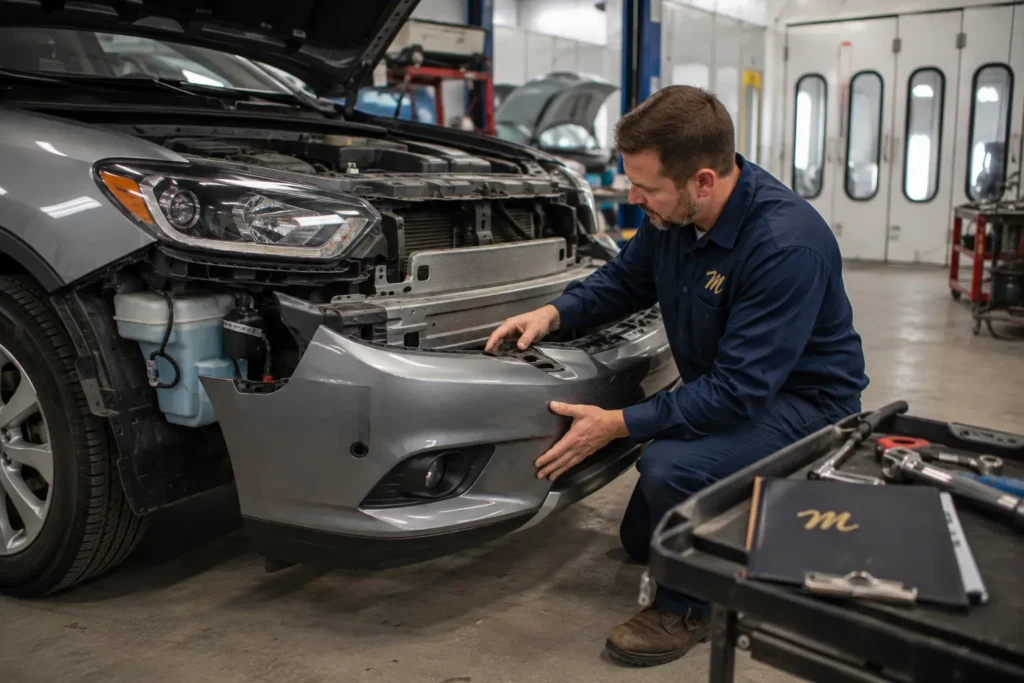
Yates County drivers deal with a damage pattern national cost guides don’t mention: deer. Fall and early winter bring the heaviest deer activity on rural roads like Route 14A, and a deer strike almost always lands on the front bumper first, along with the grille and a headlight or two. Deer impact repair is one of the more common jobs Marbles’ collision team sees every fall, and because it’s typically a comprehensive claim, it’s usually worth reporting even for a driver who’d normally pay out of pocket for a parking-lot scrape.
Winter adds its own wear. Road salt, potholes, and packed snow around the wheel wells all chip away at bumper paint over a season, and small chips that go untreated tend to crack once the cold really sets in. A quick look each spring catches most of it before it turns into a bigger repair.
Frequently asked questions
Is it cheaper to repair or replace a bumper?
Repair, in most cases. Cosmetic damage like scratches, small dents, and simple cracks usually costs less to fix than to replace outright. Replacement only becomes cheaper when the crack runs to a mounting point or a sensor is involved, since those repairs add labor on top of the part itself.
Does insurance cover bumper repair?
Yes. If the damage came from a collision, your collision coverage applies. If it came from something else, like a deer strike or a falling branch, comprehensive coverage applies instead. Either way, you’ll owe your deductible before the insurer covers the rest.
How long does bumper repair take?
Cosmetic repairs are often finished the same day or within a day. A full replacement, especially one that needs a sensor recalibrated afterward, usually takes two to three days depending on parts availability.
Someone hit my parked car and left a note. What now?
Take photos of the damage and the note, then call your insurance company before agreeing to anything with the other driver directly. A written note with contact information is usually enough to file a claim against the other driver’s policy.
What’s the difference between OEM and aftermarket bumper parts?
OEM parts come from the vehicle’s original manufacturer and match the factory fit and finish exactly. Aftermarket parts are made by a third party, cost less, and work well for older vehicles, though fit and paint match can vary more from one brand to the next.
Every bumper repair estimate comes down to what’s hidden, not just what’s visible, and that’s not something a phone call or a photo can settle on its own. Marbles Automotive has handled collision repair in Penn Yan for more than 60 years, and a free, in-person estimate is still the fastest way to get an exact number for your vehicle.